1. Introduction and Project Objectives
Tusheti is one of the most inaccessible high-mountain regions of Georgia, located on the northern slopes of the Greater Caucasus Range. Because of its extreme terrain and seasonal isolation, the national broadband development strategy “Open Net” does not foresee laying fibre-optic lines into the region in any foreseeable timeframe. In the absence of state planning, there was a critical need to build alternative infrastructure to close the digital divide.
Mission. To provide sustainable connectivity in support of economic development (primarily tourism), access to modern education, telemedicine and e-government services.
Participants and consortium. The project was delivered through the joint efforts of the Internet Society (ISOC), its Georgian national body the ISOC Georgia Chapter, the Small and Medium Operators Association of Georgia (SMOAG), and the purpose-established Tusheti Development Fund (TDF). Technical leadership was provided by project author Konstantin Stalinsky and director Ucha Seturi.
2. A Socially Oriented Business Model
The project is built on a non-commercial governance model — unique in Georgia — designed to guarantee the network’s sustainability in a very small market.
- Ownership and governance. All infrastructure built under the project was transferred into the ownership of the non-entrepreneurial (non-commercial) legal entity (NNLE) “Tusheti Development Fund” (TDF). Day-to-day operations are handled by the local community itself.
- Financial rules. The Fund’s profit is strictly capped and may not exceed 10% of operating (OPEX) and capital (CAPEX) expenditure.
- Reinvestment. 100% of revenue is directed exclusively to maintenance, equipment upgrades and expansion of the coverage area.
- Universal access. TDF carries a public obligation: the Fund may not refuse service to any resident or organisation in the region where connection is technically feasible.
3. Technical Architecture: Correcting the Design for Field Conditions
The original technical scheme proposed by the national regulator (GNCC/NRA) placed masts at low elevations close to the villages. A field audit showed this approach to be unworkable: the broken mountain relief, combined with the fact that most guesthouses and hotels sit on the slopes rather than in the valleys, made line-of-sight (LOS) from valley positions impossible to achieve.
Topology and backbone
The topology was revised strategically, moving the nodes onto dominant heights in order to form a proper backhaul chain:
Ruispiri (Telavi) — Abano Pass — Mount Diklo.
From the base node on Mount Diklo the signal fans out along three main branches:
- Diklo — Dochu / Koklata
- Diklo — Dano (covering Chesho)
- Diklo — Omalo
Masts were relocated to summit positions (for example Mount Javakhe and Mount Makratela) specifically to establish clear line of sight between opposing masts.
Equipment selection and specification tuning
Ubiquiti solutions were used to deliver up to 450 Mbit/s on the backbone links:
| Equipment | Role |
| AirFiber 5X (AF-5X) | Primary PTP bridges carrying traffic across the ridge |
| PowerBeam 5AC-620 | Interconnect links between key nodes |
| LiteBeam LBE-5AC-16-120 |
Sector coverage at village level |
Tactical antenna substitution. Seven expensive AM-5G19-120 sector antennas were dropped in favour of 14 units of LBE-5AC-16-120. Despite the lower unit cost ($115 against $155), the larger number of radiating points widened the coverage arc from 90° to 240°. This produced a stable signal in villages that the GNCC plan had not accounted for at all — Kumelaurta and the Tsova-Tusheti zone among them — where accommodation is spread over considerable distances.
Repeaters. For villages set deep in the gorges — Dartlo, Keselo, Jvarboseli — local repeaters were installed. This was partly an aesthetic decision: the alternative would have been running long cable spans down the slopes, which would have damaged the natural landscape.
Engineering countermeasures for extreme conditions
Snow cover of up to 1.5 metres and stands of evergreen conifers created a risk of obstructing the first Fresnel zone. Mast height was therefore increased to 4 metres.
The Mobitel precedent and lightning protection. One of the principal challenges was anomalous thunderstorm activity. Because of the high sulphide and ferrite content of the local rock (particularly around Kekhi), masts literally attract discharges. The commercial operator Mobitel was forced to withdraw from the region after equipment worth thousands of dollars burned out following every rainstorm. That experience was factored into the design through specialised Andeli active lightning-protection systems, capable of operating under the specific geological conditions of Tusheti.
4. Autonomous Power Supply
With no grid electricity whatsoever on the summits, every node had to be designed as energy-independent. Power for all mast-mounted network equipment is delivered through PoE switches (POE-BOX8-G) fed from solar arrays.
The winter sun problem. The initial plan called for two 100 W panels per site (12 V each, wired in series for 24 V). In practice, at this latitude (41–42°) the low winter solar azimuth prevented the polycrystalline cells from operating at the required efficiency. The available charge was insufficient to power the equipment and charge the batteries at the same time.
Increasing capacity. Since adjusting panel tilt to the optimal 53° is not technically feasible on exposed summits, the team compensated with quantity instead. The total number of solar panels across the project was increased from 12 to 20, with 4 panels per mast delivering a combined 200 W. This guarantees uninterrupted network operation twelve months a year, including power for Border Police posts and Protected Areas administration facilities.
Protection against the elements. Heavy spring snow sliding down the slopes exerts destructive pressure on mast anchors and on the panels themselves, which demanded particular attention to the strength of the steel structures — purpose-built mounts and three guy wires per mast.
Budget optimisation. Despite procuring more hardware than originally planned, the team still saved money: through the supplier’s volume discount, 12 panels cost approximately $1,155, and the company supplied two additional panels free of charge as spares.
5. Implementation Plan and Schedule
Implementation was deliberately split into two phases to work around the seasonal opening of the Abano Pass.
Preparatory phase (October 2016 – May 2017). Frequency coordination with GNCC, logistics planning, equipment procurement at a 5.4–5.6% discount through a partnership with LTD Freenet, and pre-configuration of all systems in Tbilisi.
Deployment phase (May – July 2017). Transport of cargo over the pass in Delica 4×4 off-road vehicles, high-altitude installation work, deployment of client CPE units at the first 12 guesthouses, and training of local IT personnel in basic maintenance skills (LAN cabling, IP configuration).
The network was officially opened on 26 June 2017.
6. Detailed Project Budget
Total implementation cost: $39,091.20 USD.
| Category | Contents | USD |
| Equipment | Ubiquiti (AF-5X, PowerBeam, LiteBeam), solar panels ($2,850), batteries ($2,400), masts, controllers | 20,577.00 |
| Logistics and operations | Delica 4×4 hire, fuel, accommodation in Diklo and Omalo guesthouses, catering for engineers | 7,314.20 |
| Personnel and taxes | Konstantin Stalinsky (project author), George Kirvalidze (general engineer), U. Seturi (director), M. Charelidze (tower design), A. Giorganashvili (TCP/IP), operators and drivers (incl. 20% tax) | 11,200.00 |
| Total | 39,091.20 |
7. Further Optimisation and Development Prospects
Scaling. Repeaters are planned to eliminate remaining dead zones in the villages of Chigho and Shenako.
Cross-regional expansion. The current architecture allows the signal to be carried into the neighbouring region of Khevsureti via base points at Barisakho, Arkhoti and the Datvijvari Pass. The Tusheti topology was designed from the outset with onward expansion in mind, and the network is technically ready to relay directly into Khevsureti — a neighbouring mountain region facing the same problems of isolation and difficult terrain — given the will and the resources.
Khevsureti specification and budget. A separate cost estimate and equipment specification has been prepared (“Khevsureti internet wireless data sheet”). The network is to be built on Ubiquiti and MikroTik hardware: RD-5G34 and R5AC-PTP directional antennas, AM-5G20-90 sector antennas, and RB2011UiAS-IN and RB750P-PBr2 routers. Equipment will be distributed across multiple nodal points (designated in the documentation as Zh, Gu, Tv, Ma-1, Ma-2, Ch, Be, Tk, Gu/Bar, Dat), with total hardware cost for this direction estimated at $44,138 USD. Under the preliminary work plan (Draft budget 3.0), delivery of equipment to the Khevsureti sites was scheduled for 20–23 October 2018.
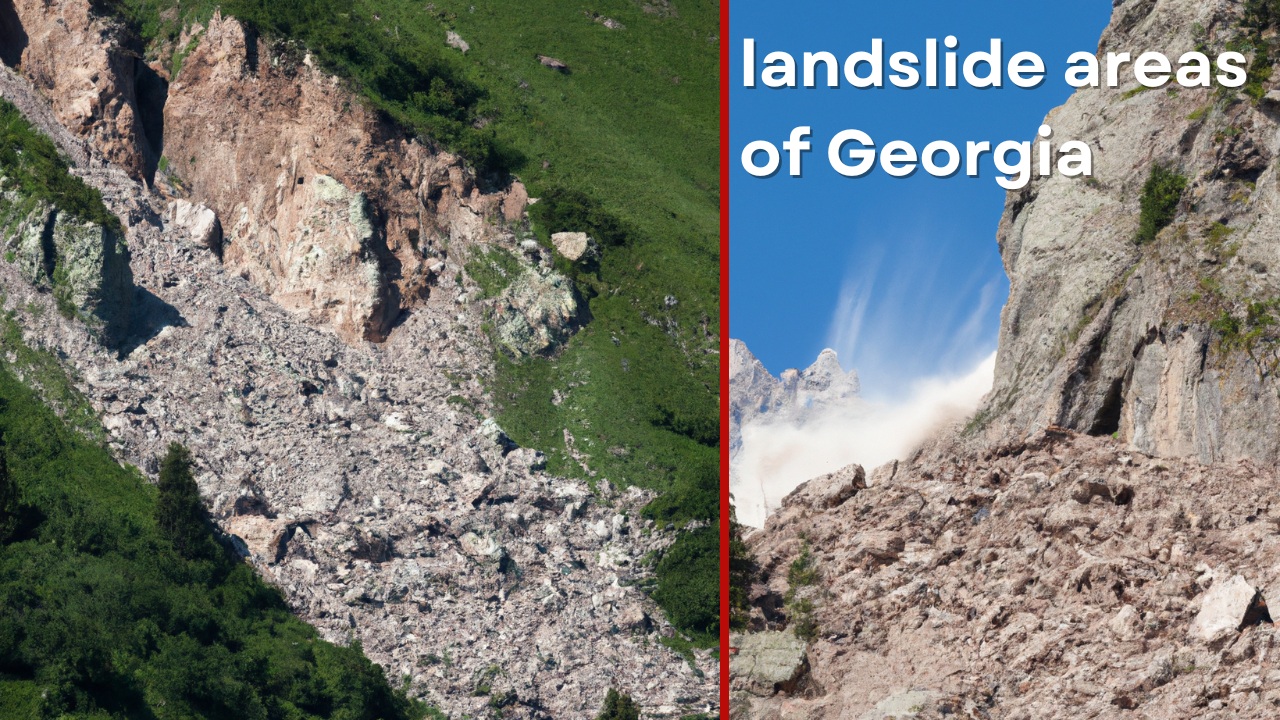
IoT ecosystem. The infrastructure is ready to host environmental monitoring systems. Priority directions are landslide-risk monitoring (following the model of the systems deployed in Adjara), forest-fire detection, and seismic monitoring (relevant to zones comparable to Javakheti).
“Connecting the Mountains” in Tusheti became an international precedent for successfully overcoming the digital divide under extreme conditions. The combination of engineering flexibility and a socially oriented ownership model made it possible to build a sustainable network in a place where conventional commercial business models had failed outright.
Contact: ISOC Georgia Chapter — info@isoc.ge | +995 577 20 15 51